Late Talker or Language Delay? Understanding the Difference
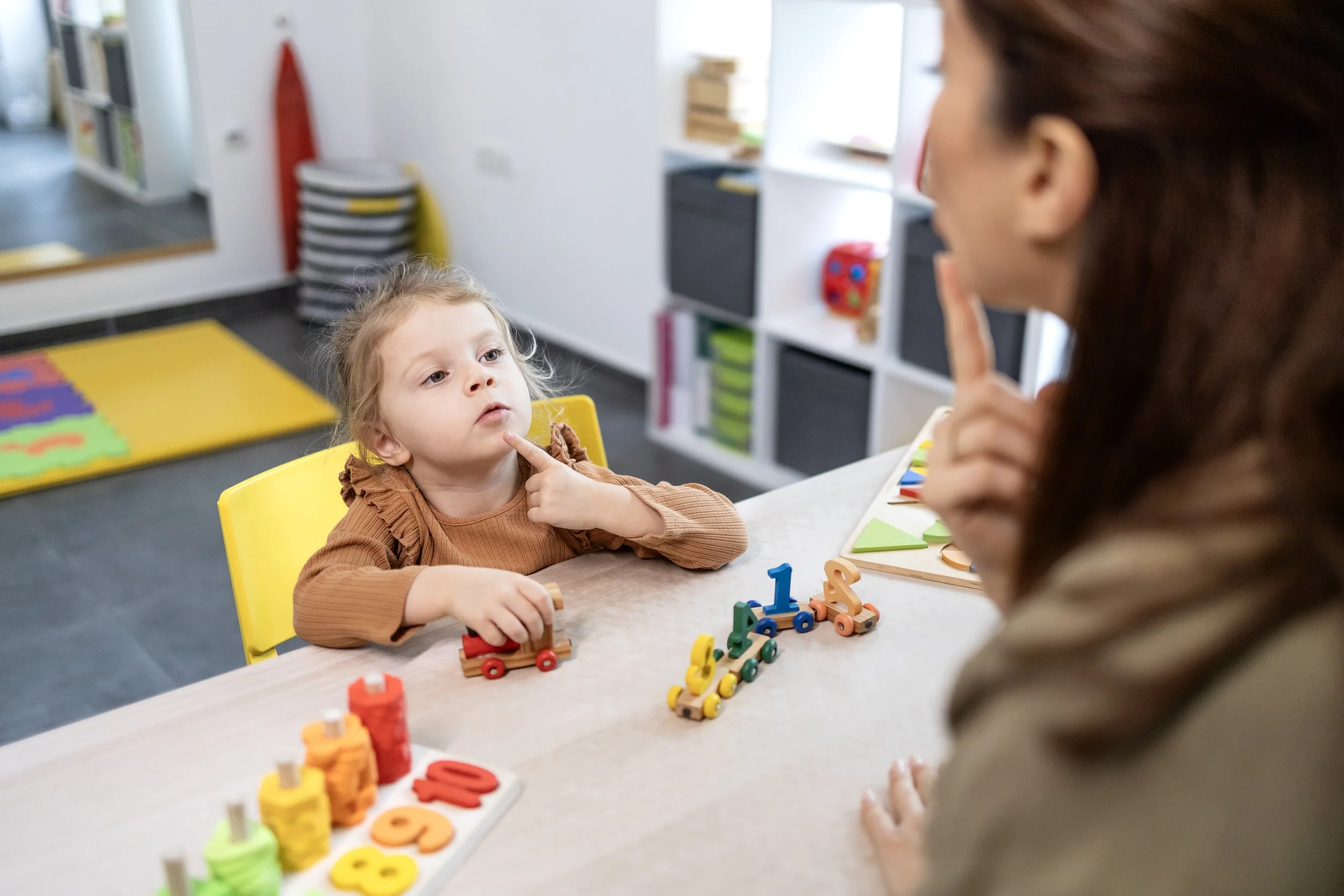
If your toddler isn't talking as much as other children their age, you've probably heard someone say:
"Don't worry. They'll talk when they're ready."
While that can certainly be true for some children, it's also understandable to wonder whether your child is simply developing at their own pace or whether additional support might be beneficial.
One of the most common questions parents ask is:
"Is my child just a late talker, or could it be a language delay?"
The answer isn't always simple, but understanding the difference can help you make informed decisions and feel more confident about your child's development.
What Is a Late Talker?
A late talker is a young child who develops spoken words later than expected but is otherwise progressing well in many other areas of communication.
Many late talkers:
Understand language well
Follow directions appropriately
Use gestures to communicate
Enjoy interacting with family members
Play appropriately for their age
Continue making steady developmental progress
Some late talkers naturally catch up to their peers over time.
However, because every child develops differently, it's not always possible to predict which children will catch up without additional support.
What Is a Language Delay?
A language delay affects a child's ability to understand language, express themselves, or both.
Children with language delays may have difficulty:
Learning new words
Combining words into phrases
Understanding directions
Answering questions
Communicating their wants and needs
Participating in conversations
Language delays can range from mild to more significant and may affect expressive language, receptive language, or both.
Expressive vs. Receptive Language
Understanding these two types of language can be helpful.
Expressive Language
Expressive language is how your child communicates with others.
This includes:
Using words
Combining words into sentences
Asking questions
Naming objects
Sharing ideas
A child with expressive language challenges may understand much more than they are able to say.
Receptive Language
Receptive language is your child's ability to understand what others say.
Examples include:
Following directions
Understanding questions
Identifying familiar objects
Recognizing everyday words
Responding appropriately during conversations
Some children experience challenges with understanding language, even if they use several spoken words.
Signs Your Child May Benefit From an Evaluation
Every child develops differently, but it may be helpful to speak with a speech-language pathologist if your child:
Uses very few words for their age
Isn't combining words by around age two
Has difficulty understanding simple directions
Becomes frustrated when trying to communicate
Relies heavily on gestures instead of words
Is difficult to understand
Doesn't seem interested in communicating with others
Has stopped using words they previously used
These signs do not automatically mean your child has a language delay, but they may indicate that a professional evaluation would be beneficial.
Why Waiting Isn't Always the Best Option
Many parents worry about overreacting.
They don't want to seek help if their child will simply catch up on their own.
Fortunately, scheduling a speech evaluation doesn't mean your child will automatically need ongoing therapy.
An evaluation simply provides information.
It helps identify your child's strengths, areas of growth, and whether any support is recommended.
If everything looks appropriate for your child's age, you'll likely leave with reassurance.
If concerns are identified, you'll have a plan for moving forward.
How Speech Therapy Can Help
Speech therapy is designed around each child's unique strengths and needs.
Depending on your child's goals, therapy may focus on:
Building vocabulary
Encouraging first words
Combining words into phrases
Improving understanding of language
Strengthening play and communication skills
Supporting conversations and social interaction
Coaching parents on strategies to use at home
Sessions are play-based, engaging, and individualized to help children learn through meaningful interactions.
Trust Your Instincts
Parents often have a strong sense when something doesn't feel quite right.
If you've been wondering whether your toddler is simply taking their time or may benefit from additional support, it's okay to ask questions.
Seeking an evaluation isn't about labeling your child.
It's about understanding where they are today and giving them every opportunity to grow and communicate with confidence.
We're Here to Help
At The Nurturing Room, we provide compassionate, evidence-based pediatric speech therapy for families throughout Broward County and South Florida.
If you have questions about your child's speech or language development, we're here to help.
Contact The Nurturing Room to schedule a pediatric speech therapy consultation and learn more about your child's communication development.
